

TL; DR
- Ajman is the UAE's smallest emirate by area but its fourth most populous, sitting on the coast between Sharjah and Umm Al Quwain.
- Popular residential areas include Al Yasmeen, Al Zahya, Al Helio, Al Rawda, Al Mowaihat, Al Nuaimiya, and Ajman Corniche, each suited to different lifestyles and budgets.
- The cost of living is noticeably lower than in Dubai or Sharjah, with studio apartments starting around AED 14,000–21,000 a year.
- Dubai is roughly a 30–45-minute drive via Sheikh Mohammed Bin Zayed Road (E311), with regular E400 buses also connecting the two emirates.
- Schools cover British, American, and Indian curricula, and Ajman University is one of the UAE's longest-established private universities.
- Healthcare includes government facilities like Sheikh Khalifa Medical City Ajman alongside private hospitals such as Thumbay and Ajman Speciality Hospital.
- Ajman offers freehold ownership to UAE, GCC, and international buyers in designated zones, regulated by ARRA.
- It's best suited to families, first-time buyers, retirees, and professionals commuting to Dubai or Sharjah who want space and quiet without the bigger city price tag.
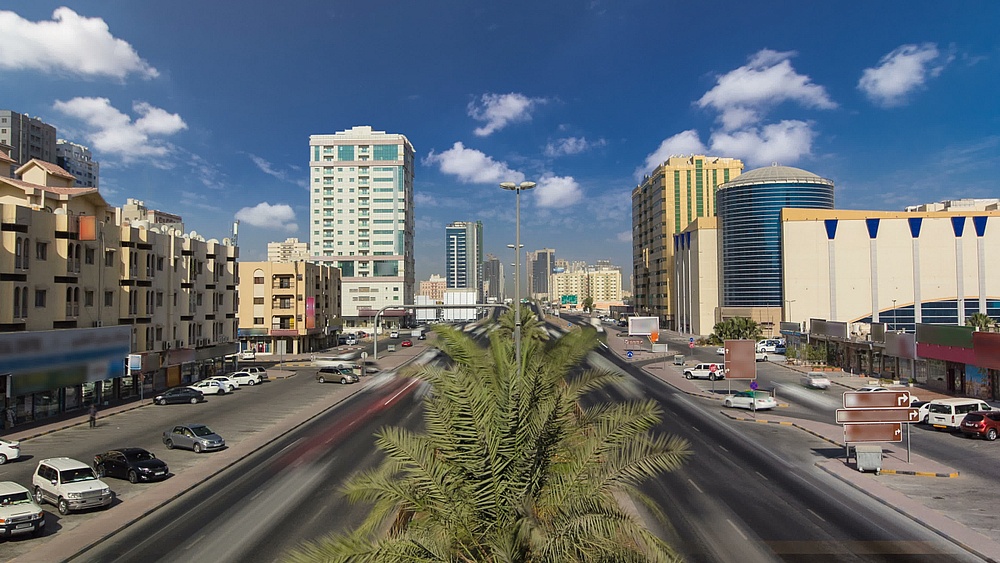
Ajman has quietly become one of the UAE's most practical places to settle not flashy, not trying to compete with Dubai's skyline, but consistently good value for families, professionals, and retirees who want space, quiet, and a shorter commute to their savings account. If you're weighing up whether to move here, this guide covers what daily life actually looks like: where to live, what things cost, and what you get for your money.
We'll walk through the best residential areas, cost of living, schools, healthcare, shopping, safety, and more everything you'd want to know before deciding where in Ajman to call home. If you're also comparing investment potential, Why Is Ajman the Hottest Investment Spot in the UAE Right Now? is a useful companion read.
Why Live in Ajman?
Ajman is the smallest of the UAE's seven emirates by land area, but it punches well above its size when it comes to livability. It sits directly on the Arabian Gulf coast, wedged between Sharjah and Umm Al Quwain, which means residents get genuine beachfront living without giving up easy access to Dubai and Sharjah's job markets.
The appeal really comes down to three things: affordability, space, and a slower pace. Property and rental prices sit well below Dubai and Sharjah for comparable space, traffic is lighter, and the emirate has invested steadily in schools, hospitals, and roads over the past decade without losing its more relaxed, community-oriented character. It's also one of the more established freehold markets in the UAE, having opened its property market to foreign buyers back in the 2000s, which gives it a longer track record than some of the region's newer freehold zones.
It also helps that Ajman doesn't ask residents to choose between city convenience and a quieter home life. Plenty of people who work in Dubai or Sharjah's business districts still choose to live in Ajman precisely because the trade-off a slightly longer commute in exchange for noticeably lower rent and a calmer daily environment tends to work out in their favour over time.
Best Areas to Live in Ajman
Where you should live in Ajman depends heavily on your budget, whether you want a villa or an apartment, and how much you value being near the water versus being near schools and malls. Here's a rundown of the areas that come up most often.
Al Yasmeen
A settled, all-villa community near the Sharjah border, popular with families for its quiet, tree-lined streets and reasonable access to schools, parks, and Sheikh Mohammed Bin Zayed Road (E311). It's one of the more mature communities on this list, which suits buyers who want established infrastructure rather than a still-developing neighborhood.
Al Zahya
A newer, still-developing community offering a broader mix of villas, townhouses, and apartments, generally at more accessible prices than Al Yasmeen. Its infrastructure continues to expand, which appeals to buyers comfortable trading some current convenience for long-term value.
Al Helio
A fast-growing villa community popular with investors and first-time buyers thanks to lower entry prices and a genuinely family-oriented layout, with walkable streets and community parks built in from early on.
Al Rawda
One of Ajman's more established residential areas, with a mix of apartments and villas, good school access, and convenient road connections via Al Ittihad Road (E11) and E311, making it a reliable, well-connected choice for long-term tenants and owners alike.
Al Mowaihat
A budget-friendly area south of the city near the Ajman Industrial Area, popular with families seeking larger homes without the premium of more central locations, and close enough to Al Zorah's beach and golf amenities for weekend outings.
Al Nuaimiya
One of Ajman's most centrally located and convenient neighbourhoods, close to hospitals, government offices, and shopping malls like Safeer Mall — a strong fit for those who want everything within easy reach and don't mind busier streets in exchange for convenience.
Ajman Corniche
A beachfront strip of apartment towers, including Corniche Tower, Ajman's tallest building offering sea views, walking paths, and a genuinely coastal lifestyle for couples and singles who want to be near restaurants, cafes, and the beach itself.
|
Area |
Best For |
|
Al Yasmeen |
Families wanting an established, quiet villa community |
|
Al Zahya |
Buyers wanting variety and more accessible prices |
|
Al Helio |
Investors and first-time buyers |
|
Al Rawda |
Families wanting established infrastructure |
|
Al Mowaihat |
Budget-conscious families |
|
Al Nuaimiya |
Convenience — hospitals, malls, and government offices nearby |
|
Ajman Corniche |
Couples and singles wanting a beachfront lifestyle |
Cost of Living
Affordability is arguably Ajman's biggest selling point relative to Dubai and Sharjah. Rents, utilities, and everyday groceries all run noticeably cheaper, without much compromise on quality.
Housing Costs
- Studio apartments: roughly AED 14,000 – 21,000 per year
- 1-bedroom apartments: roughly AED 25,000 – 40,000 per year
- 2-bedroom apartments: roughly AED 35,000 – 45,000 per year
- Villas: roughly AED 70,000 – 120,000 per year, depending on size, community, and how established the area is
Utilities & Daily Expenses
Monthly electricity, water, and internet bills for a small family typically run somewhere in the range of AED 400 to 600, though this varies with usage, apartment size, and how intensively air conditioning is used during the hotter months. Grocery shopping is also noticeably cheaper than in Dubai, with hypermarkets such as Lulu, Nesto, and Safeer spread across the emirate, alongside smaller local markets where fresh produce tends to be particularly good value.
Taken together, most residents find that a household budget in Ajman stretches noticeably further than an equivalent one in Dubai or Sharjah, which is part of why the emirate continues to attract both young professionals and larger families looking to make their income go further without relocating outside the UAE entirely.
Property Prices & Housing Options
Ajman's housing stock ranges from compact studio apartments to spacious 6-bedroom villas, with prices generally scaling with proximity to the coast, the Sharjah border, and how established a given community is. Villas in communities like Al Yasmeen and Al Rawda typically start around AED 2 million to 3.5 million, with average prices in the AED 1.9 million to 2.7 million range depending on size and location, while newer or still-developing communities such as Al Zahya, Al Helio, and Al Mowaihat tend to offer somewhat lower entry points.
Apartments span a wide range too, from affordable studios in Al Nuaimiya to sea-view units along Ajman Corniche, where rental apartments start from roughly AED 35,000 a year. Whether you're buying or renting, it's worth confirming current prices directly with an agent, since listings shift regularly with new phases and market conditions.
Education
Ajman offers a reasonable spread of curricula for a relatively small emirate, including British, American, and Indian systems. Well-regarded schools include The First Academy (American curriculum), International Indian School Ajman, and British International School, alongside numerous nurseries and smaller private schools spread across residential communities.
For higher education, Ajman University, established in 1988 as one of the UAE's first private universities, offers undergraduate and postgraduate programs across multiple colleges and features regularly in regional university rankings. Nearby Gulf Medical University adds another option for students pursuing healthcare-related degrees. Given the emirate's small size, most families find school commutes noticeably shorter than in Dubai or Sharjah.
Healthcare
Healthcare in Ajman spans both government and private facilities. Sheikh Khalifa Medical City Ajman (SKMCA), which opened in 2017, is the emirate's main government hospital complex, offering 24-hour emergency care alongside specialist services. On the private side, Thumbay Hospital, Ajman Speciality Hospital, and Amina Hospital are among the most established options, each offering a broad range of specialities and emergency services.
Pharmacies and smaller clinics are common throughout residential communities, so routine care rarely requires a long trip, and residents needing more specialised treatment can drive into Sharjah or Dubai, both within easy reach.
Shopping & Entertainment
City Centre Ajman, located in Al Jurf, is the emirate's largest mall, with international and local brands, a cinema, and a range of dining options. For more budget-friendly shopping, Safeer Mall and Galleria Mall both offer a solid mix of retail and food courts, while traditional souks around the city centre remain popular for clothing, spices, and gold.
Dining options range from international fast-food chains to local Emirati, Indian, and Arabic restaurants, with some of the more memorable spots clustered along the Corniche and Ajman Marina, where waterfront views come with the meal. For a more traditional shopping experience, several souks near the city centre continue to draw both residents and visitors looking for gold, spices, and textiles at prices that are hard to match in Dubai's more polished malls.
Beaches, Parks & Lifestyle
Ajman Beach and Al Zorah Beach are among the emirate's most popular public beaches, both known for clean sand and calm, family-friendly waters. Ajman Marina, just a short walk from the Corniche, offers waterfront dining, a yacht club, and pleasant spots for an evening stroll.
For a look at local heritage, the Ajman Museum, housed in a restored 18th-century fort, covers the emirate's pearl-diving and seafaring history, while the Dhow Building Yard near Ajman Creek lets visitors watch traditional wooden boats being built by hand, a craft that's been passed down for generations. Add in several community parks scattered across residential areas, and Ajman offers a genuinely varied lifestyle for a relatively compact emirate.
Transport & Connectivity
Ajman's road network centres on Sheikh Mohammed Bin Zayed Road (E311), which connects the emirate to Sharjah and Dubai, with Dubai typically a 30 to 45 minute drive depending on traffic and the exact destination. Most residents find a personal vehicle the most practical option day-to-day, since petrol remains inexpensive and driving distances within the emirate are short.
For those relying on public transport, Ajman's bus network runs frequent local routes as well as intercity services, most notably the E400 to Dubai's Union Bus Station, running roughly every 15 to 30 minutes between around 4:30 am and 11:30 pm. Fares are paid using the Masaar Card, a contactless payment card that also offers a discount over paying in cash, and which works across both local Ajman routes and intercity connections to Sharjah, Dubai, and beyond.
Taxis are also widely available and reasonably priced compared with Dubai, making them a practical option for occasional trips even for residents who otherwise rely on their own car day-to-day. For anyone weighing up whether to bring a vehicle, the short answer is: most residents do, simply because it makes juggling work, school runs, and errands across a spread-out emirate considerably easier.
Safety & Community
Ajman has a strong reputation for safety and has been recognized in recent global rankings as one of the safer cities in the world a point residents frequently cite as one of the emirate's biggest quality-of-life advantages. Gated residential communities, visible police presence, and generally light traffic all contribute to a sense of everyday ease that's noticeably different from bigger, busier cities nearby.
Community life still carries a strong Emirati cultural thread, with mosques, cultural centres, and heritage sites like the Ajman Museum playing an active role in daily life, alongside the more international, multicultural mix found in newer residential developments.
Pros & Cons of Living in Ajman
Pros:
- Noticeably lower cost of living than Dubai or Sharjah, across rent, utilities, and groceries.
- Genuine beachfront living alongside quieter, family-friendly residential communities.
- Freehold ownership open to international buyers, with a longer track record than some newer UAE freehold markets.
- Manageable commute to Dubai and Sharjah for professionals who work outside the emirate.
Cons:
- Public transport is more limited than in Dubai, making a personal vehicle close to essential for most residents.
- Some newer communities are still developing their schools, retail, and healthcare infrastructure.
- Fewer large-scale entertainment and nightlife options compared with Dubai.
Who Should Live in Ajman?
Ajman tends to suit a specific set of priorities well, even if it isn't the right fit for everyone:
- Families looking for spacious, affordable homes with reasonable access to schools and parks.
- First-time buyers and investors drawn to freehold ownership and lower entry prices than Dubai or Sharjah.
- Professionals commuting to Dubai or Sharjah who want more space for their money and a quieter home base.
- Retirees and those seeking a slower pace who value safety, community, and a genuine coastal lifestyle without Dubai-level costs.
Related Guides
For a deeper look at specific communities and buying considerations, these AjmanProperties.ae guides are natural next reads:
- Al Yasmeen vs Al Zahya: Which Ajman Villa Community Is Better for Families? A direct comparison of two of Ajman's most popular villa communities.
- The Most Popular Freehold Villa Communities in Ajman: A wider look at Al Yasmeen, Al Zahya, Al Helio, Al Rawda, and Al Mowaihat.
- Why Is Al Helio Becoming a Hotspot for Villa Buyers in Ajman? A closer look at one of Ajman's fastest-growing communities.
- Best Areas to Live in Ajman with Family: More detail on family-friendly neighbourhoods.
- Al Nuaimiya and Al Mowaihat: browse current listings in two of the communities covered here.
Frequently Asked Questions
Is Ajman a good place to live?
Yes, particularly for families, first-time buyers, and professionals who want more space and a lower cost of living than Dubai or Sharjah, without giving up easy access to both.
Which are the best neighbourhoods in Ajman?
Al Yasmeen, Al Rawda, Al Nuaimiya, and Ajman Corniche are consistently among the most popular, alongside newer, more affordable areas like Al Zahya, Al Helio, and Al Mowaihat.
Why is Ajman cheaper than Dubai and Sharjah?
Lower property and rental prices, lighter traffic, and a smaller overall cost base all contribute to Ajman's affordability compared with its larger neighbours.
How far is Ajman from Dubai?
Ajman is roughly 30 to 45 minutes from central Dubai by car via Sheikh Mohammed Bin Zayed Road (E311), depending on traffic, with regular E400 buses also making the trip.
What is the average rent for an apartment in Ajman?
Studio apartments typically rent for around AED 14,000 to 21,000 a year, one-bedroom units for roughly AED 25,000 to 40,000, and two-bedroom apartments for approximately AED 35,000 to 45,000, depending on location and building age.
Can expatriates buy property in Ajman?
Yes. Ajman permits freehold ownership for expatriates and international buyers within designated freehold zones, regulated by the Ajman Real Estate Regulatory Agency (ARRA).
Is Ajman safe?
Yes. Ajman has a strong reputation for safety and has featured in recent global rankings as one of the safer cities worldwide, with gated communities and visible policing common across residential areas.
What schools are available in Ajman?
Options include The First Academy (American curriculum), International Indian School Ajman, and British International School, among others, covering British, American, and Indian curricula.
Are there good hospitals in Ajman?
Yes. Sheikh Khalifa Medical City Ajman serves as the main government facility, alongside private hospitals such as Thumbay Hospital, Ajman Speciality Hospital, and Amina Hospital.
Does Ajman have beaches?
Yes. Ajman Beach and Al Zorah Beach are both popular public beaches, and Ajman Corniche offers a walkable beachfront lifestyle with apartments, restaurants, and parks.
Is public transport reliable in Ajman?
Local and intercity buses, including the E400 route to Dubai, run regularly and are affordable using the Masaar Card, though most residents still find a personal vehicle more convenient for daily life.
Final Thoughts
Ajman won't try to out-Dubai Dubai, and that's exactly the point. What it offers instead is a genuinely balanced lifestyle: affordable housing, a real stretch of coastline, decent schools and hospitals, and a short enough commute that living here doesn't mean giving up a Dubai or Sharjah career. Whether you're a family after more space, a first-time buyer chasing freehold ownership, or a professional tired of Dubai's rents, Ajman is worth serious consideration.
The right neighbourhood ultimately depends on your own priorities, whether that's Al Yasmeen's settled family feel, Al Nuaimiya's convenience, or Ajman Corniche's sea views, but the underlying value proposition holds fairly steady across the emirate: more space, lower costs, and a genuinely liveable pace of life.
If you're ready to explore specific neighbourhoods or listings, get in touch with the team at Ajman Properties for guidance tailored to your budget and lifestyle.



Comments (0)
Leave a comment